
Ingredients
Method
- Sort dried beans and discard any misshapen or discolored beans. Rinse a couple of times, and then soak 1 cup rajma (kidney beans) in enough water to cover them.Soaking should ideally last for 8 to 9 hours, so I usually soak them the night before I cook.
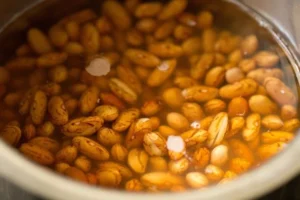
- Once the beans are well soaked, discard the soaking water. Drain and rinse the soaked beans a few times to remove any leftover grit, if any.
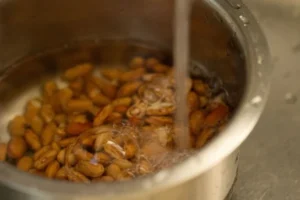
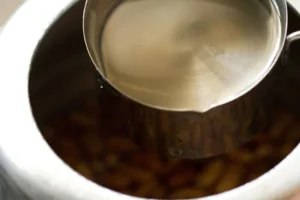
- Add the rinsed and drained kidney beans to a 3 litre stovetop pressure cooker.If you do not have a stovetop pressure cooker, cook the beans in a pot or pan or the Instant Pot. Add water as needed while cooking. (Details mentioned below in the recipe card).
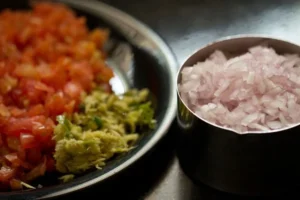
- While the kidney beans are cooking, prep the following:For the paste, you need to crush or grind 1 inch ginger, 5 to 6 small garlic cloves (or 3 to 4 medium garlic cloves), and 1 to 2 green chilies to a paste in a mortar-pestle or a small grinder.chop 1 large onion (¾ to 1 cup finely chopped onion)2 large tomatoes (1 cup finely chopped tomatoes)make the crushed ginger+garlic+green chili paste
- When the pressure settles down on its own and naturally drops in the cooker, then only open the lid.Check if the rajma is cooked or not by eating or pressing a few beans with your fingers. The cooked beans should not have a bite to them and must be softened.The rajma beans should be completely cooked and have a melt in the mouth texture. They should not be al dente or having a slight bite to them.If they are not cooked completely, then pressure cook again (adding some water if needed) for a few more minutes.

- Heat either 3 tablespoons of butter (or 2 tablespoons butter + 1 tablespoon oil), in another pot or pan or kadai. Keep the heat to low or medium-low.
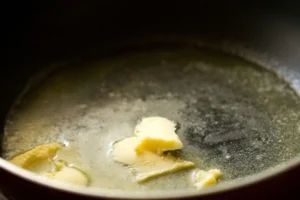
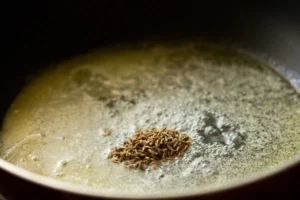
- Add ½ teaspoon cumin seeds first and let them crackle and get browned.
- Then add the finely chopped onions.
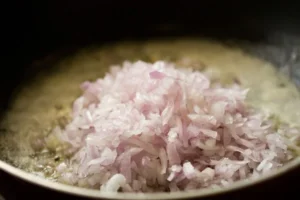
- tir and begin to sauté them on medium-low to medium heat.
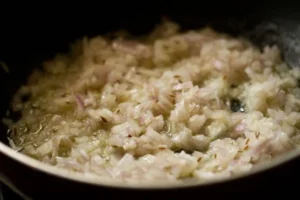
- Keep on stirring the onions while sautéing them. This will ensure both uniform cooking and also that they don’t get burnt.Take care not to burn the onions, as this will impart bitter tones to the rajma curry.
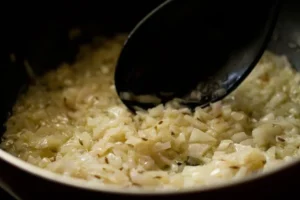
- Light browning of the onions is also fine.
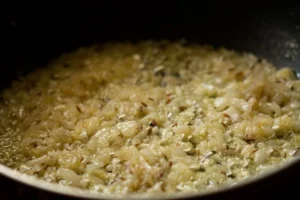
- Sauté the onions till they are caramelized and golden brown.
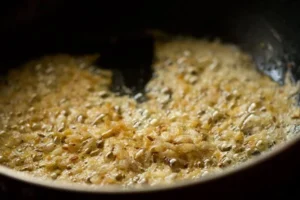
- Lower the heat and add the crushed ginger-garlic-chilli paste.
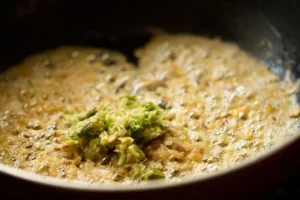
- Stir and sauté for 5 to 10 seconds on a low heat or until the raw aroma of ginger-garlic goes away
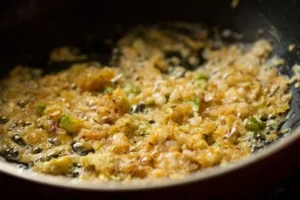
- Add the finely chopped tomatoes.

- Mix very well.

- Sauté for 2 to 3 minutes until the tomatoes become soft on a medium-low to medium heat.

- Add all the spice powders one by one:Note: If you are gluten free, be sure to source certified gluten free asafoetida, as many commercial brands process the spice with wheat.¼ teaspoon turmeric powder½ teaspoon red chilli powder (or cayenne pepper or paprika)1 teaspoon coriander powdera pinch of asafoetida (hing)½ teaspoon garam masala powder.
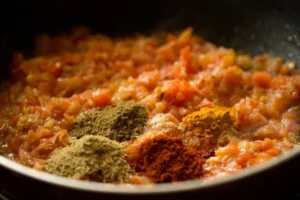
- Mix again very well.

- Continue to sauté the whole masala base until the fat starts leaving the sides of the masala on a medium-low heat.The onion tomato masala will thicken, become glossy and start clumping around itself.

- Use a slotted spoon or a strainer, remove the rajma beans from their cooking liquid and add them to the masala.
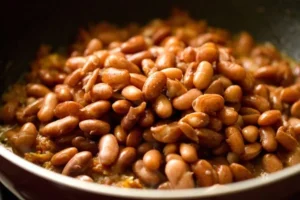
- Stir and sauté for a minute.

Notes
Serve rajma masala with steamed basmati rice, jeera rice, saffron rice, roti, paratha or naan. The combination of rajma and rice is quite famous in North India.
You can garnish with some coriander leaves for some fresh flavor and color when serving. You could even add some ginger julienne as a garnish.
It is best to consume the kidney bean curry the day it is prepared. But if you have any leftovers, then store it in an airtight container in the refrigerator for a day.
The curry consistency will thicken after cooling, so add a bit of water while warming or heating it up to loosen the consistency.