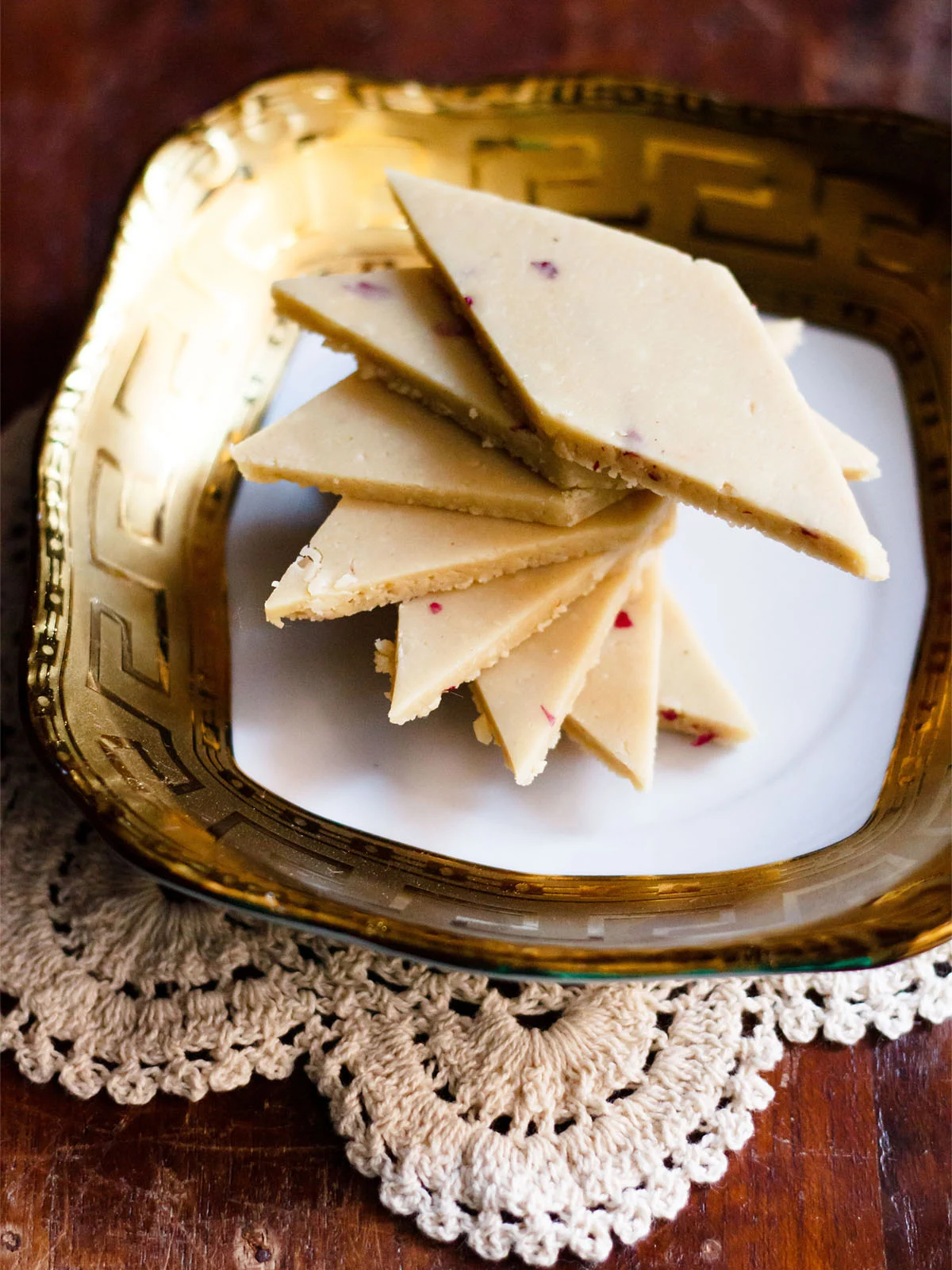
Ingredients
Method
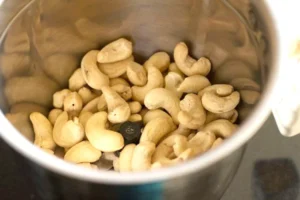
- Place 1 cup cashews (kaju) in a dry grinder or coffee grinder or blender. I usually keep cashews at room temperature. Hence the cashews are dry.Avoid using refrigerated or frozen cashews as they will release moisture once ground and turn more into a cashew paste.
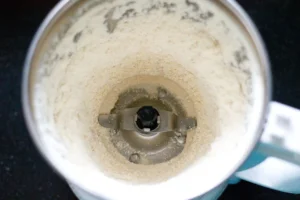
- Grind the kaju to a smooth powder, making sure you don’t over do the grinding process as fat should not release from the cashews.I ran the mixer at a stretch first and then scraped the sides and ran again at intervals for a couple of times.The cashews should be in powder form and not become pasty or buttery like cashew butter.If there are tiny pieces in the cashew powder, then just let it be – or you can also sieve the cashew powder and set aside. Use a medium fine sieve and not a fine one to sift the powdered cashews.
- Combine ½ cup sugar and 5 tablespoons water in a thick bottomed pan (or kadai or a non-stick pan).
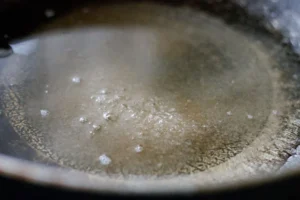
- Keep on low flame and let the sugar dissolve in the water. There is no consistency in the sugar syrup like one string or two string. Simply let the sugar dissolve in the water and then proceed with the next step.
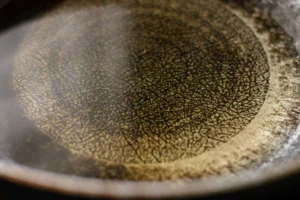
- When the sugar completely dissolves in the water, add the cashew powder.
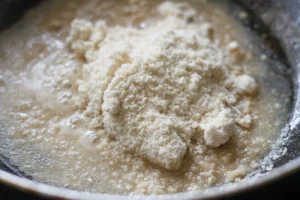
- Stir and keep on stirring non-stop on a low flame. If there are lumps then break the lumps as you stir and continue to stir. This consistent stirring is the key for a smooth and even kaju katli dough.
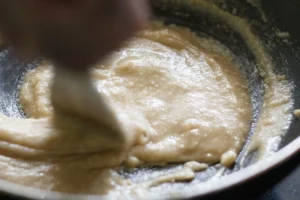
- The mixture will thicken and start coming together to form a very soft dough. Then it is time to remove the whole lump of the mixture from the pan and place it on a work surface. This process of making the kaju katli dough took me exactly 8 minutes on a low flame.Depending on your temperature, pan etc you can use a time span of 7 to 9 minutes after adding the cashew powder.Another way of checking is taking a small piece of the dough and form into a ball. The ball should not stick to your fingers and be smooth. Do not scrape the edges as they are sticky and chewy.
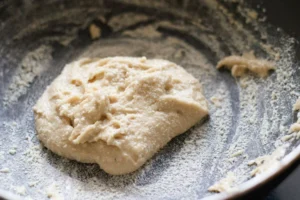
- Put the entire cashew dough on a work surface. Add 1 teaspoon rose petals (or 1 teaspoon rose water or 8 to 9 strands of saffron) and 1 tablespoon ghee or coconut oil. The addition of rose petals and coconut oil or ghee are optional.The dough will be very hot, so let it rest for a minute or two until just hot enough to touch. When the heat is enough to handle begin to knead the dough.
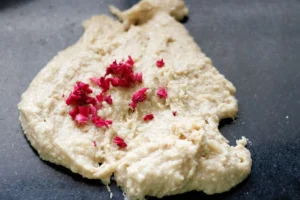
- Knead the dough lightly, flatten it and place it on a greased plate or tray. Don’t overdo kneading as this will release fat from the cashews. The grainy texture in the dough goes away as you knead it. Remember the dough should be hot while kneading.You can also apply some oil or ghee on your palms instead of adding ghee/oil separately. If the dough looks too soft, add a teaspoon of some dried milk powder. If the dough looks dry or dense add a teaspoon of milk to soften it.
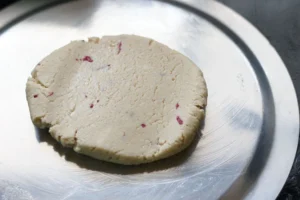
- You can also place it on a large piece of parchment or butter paper. The cashew dough should still be quite warm when you start rolling it. As it cools it will harden more and then becomes difficult to roll, so work quickly!Gently roll the kaju barfi dough with a rolling pin to make it even. There will be fine cracks in the dough.
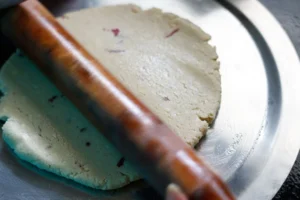
- To smoothen the cracks, place parchment paper on top and roll more. This will fill in the cracks and the kaju barfi will have a smooth finish.
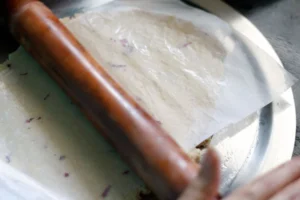
- Roll to get a thickness of about 3 to 5 mm (about ⅛ inch). Then let the rolled cashew dough cool.
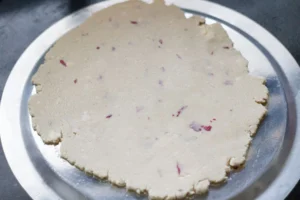
- Once cooled completely, cut the cashew dough into squares or diamond shapes. Scrape off the uneven edges and enjoy as a little snack as you work.
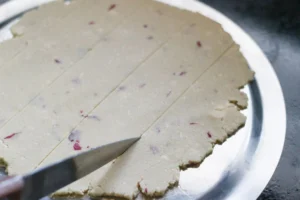
- I recommend that you use a butter knife to gently remove the kaju barfi pieces from the bottom of the tray or paper, taking care that they do not break.
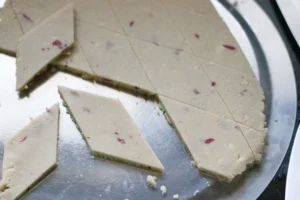
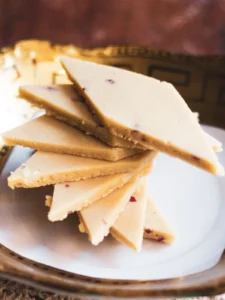
- Arrange them on a plate one at a time as you go. Serve kaju katli or kaju barfi right away, or store them in an airtight container.
Notes
I share below some essential tips for making the best kaju katli recipe.
- Powdered cashew texture: You have to powder cashews finely. When powdering them, use the pulse option in your blender or blend in intervals of some seconds. Do not blend at a long stretch as we just want powdered cashews. The fat should not release from the cashews while blending and you definitely do not want cashew butter.
- Consistency of the sugar syrup: In this recipe, you just need to melt the sugar in the water first and then add the cashew powder. Mix and continue to cook till the cashew dough begins to leave the sides of the pan and comes together.
- Cashew dough texture: The cashew dough should be soft but not sticky. If you roll a tiny ball from the dough it should not stick to your fingers but be smooth.
- Kneading cashew dough: Kneading helps in binding the dough making it even and smooth. If you roll the dough directly, the kaju barfi won’t be even, smooth and will have a grainy texture. Knead the dough lightly. The fat should not release when kneading the dough. The grainy texture of the dough goes away if you knead it well. If the the dough looks more softer, then add a teaspoon of some milk powder to it and mix. If the dough looks dry or dense, add a teaspoon of milk to soften it.