Rava Upma
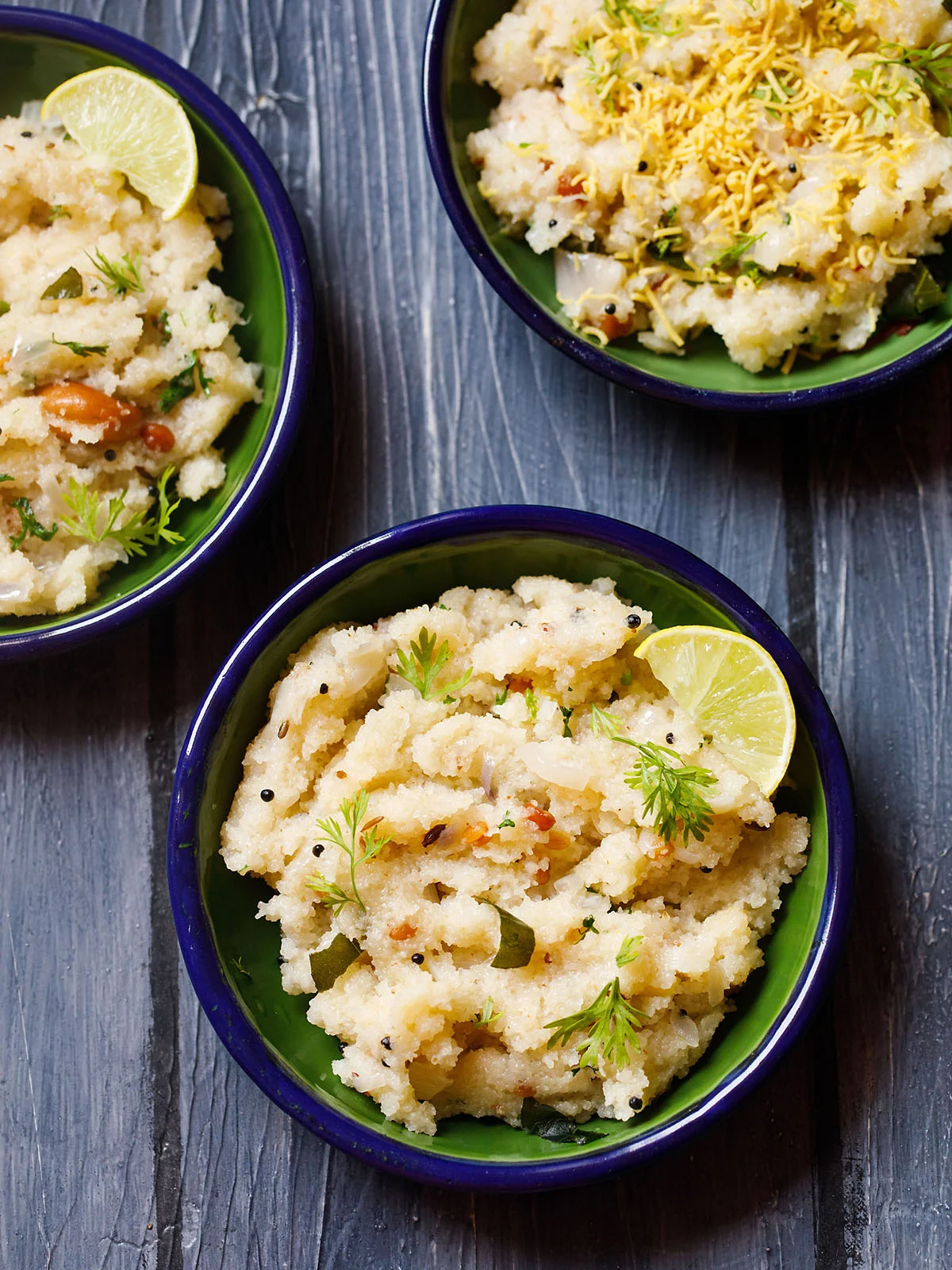
Upma, also known as rava upma or suji upma, is a traditional South Indian breakfast made with roasted semolina. The rava is cooked with mustard seeds, lentils, curry leaves, onions, ginger and green chilies to make a soft, savory dish with mild spice. This upma recipe follows a simple home-style method adapted from my mother’s recipe. It is usually served hot with coconut chutney, lemon wedges or pickle.
Ingredients
Method
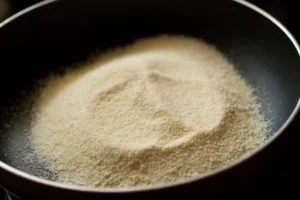
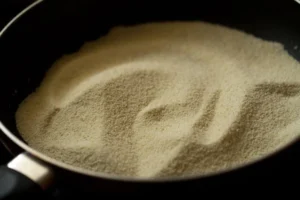
- Heat a pan or kadai first. Add 1 cup rava or cream of wheat (fine variety).

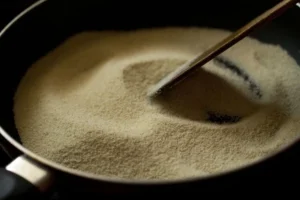
- Begin to roast the rava. Stir often while roasting the rava.
- The rava or sooji grains should become fragrant and start to look dry, separate and crisp. Don’t brown the rava.
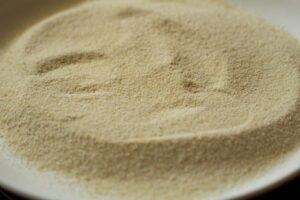
- Once the rava becomes fragrant and starts to look dry and crisp, switch off the flame and put the roasted rava on a plate and set aside.
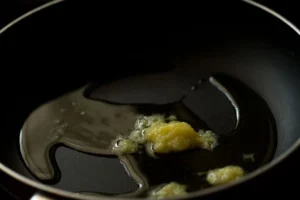
- In a pan, heat 2 tablespoons ghee (clarified butter) or oil. You could use sunflower oil or peanut oil or safflower oil or any neutral tasting oil.
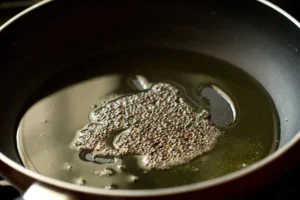
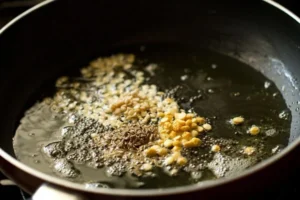
- Lower the heat. Add 1 teaspoon mustard seeds. When you hear the crackling sound of mustard seeds, it means they are getting fried.
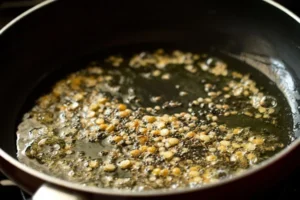
- Now add the following ingredients:½ teaspoon cumin seeds1 teaspoon chana dal (husked and split bengal gram)1 teaspoon urad dal (husked and split black gram)
- Stirring often fry until the chana dal and urad dal begin to brown a bit.
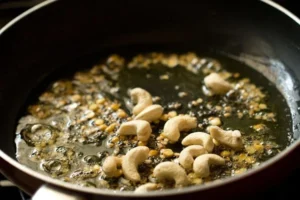
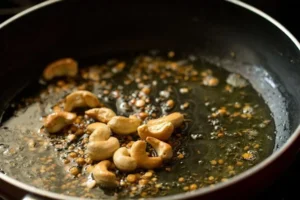
- Immediately add 10 to 12 cashews and begin to fry on a low to medium-low heat.
- By the time the cashews get golden the dals should also be golden.
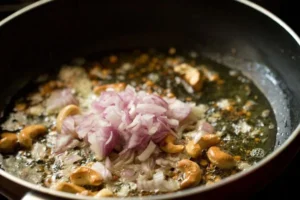
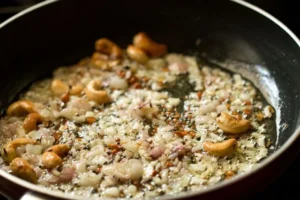
- Now add the ⅓ cup of finely chopped onions.
- Sauté the onions until they soften and become translucent on a low to medium-low heat.
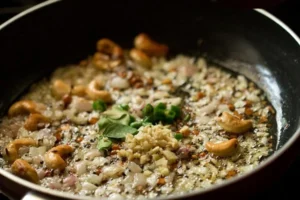
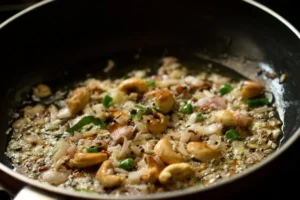
- Then add 1 teaspoon chopped green chillies, 1 teaspoon chopped ginger and 8 to 10 curry leaves.You can also add 1 dried red chilli (halved and with seeds removed) at this step.
- Mix well and sauté for a few seconds.
Boil Water
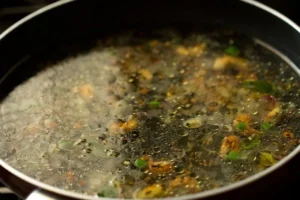
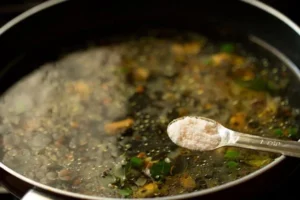
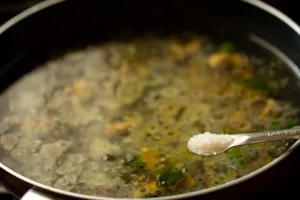
Then add 2.5 cups water to this mixture.- Add salt as required. Mix well and check the taste of water. It should be a bit salty but not too much.In case if the salt becomes less in the dish, you can always sprinkle some salt from the top when eating.
- Then add ½ to 1 teaspoon sugar.Sugar is optional and you can skip it. We prefer a slight sweet taste in the dish and hence we add it.
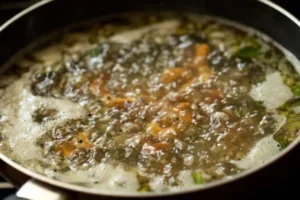
- Stir again. On a medium to high flame, heat the water and let it come to a rolling boiling.
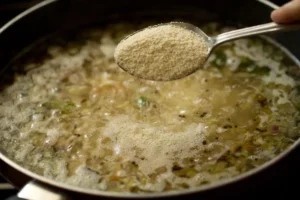
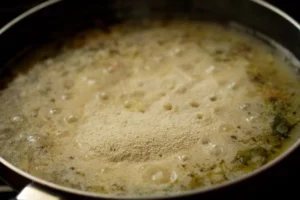
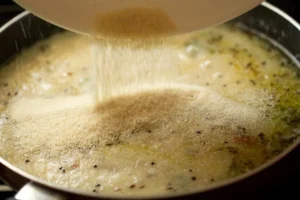
- When the water comes to a rolling boil, lower the flame to its lowest. Then add the rava in 4 to 5 batches with a spoon.
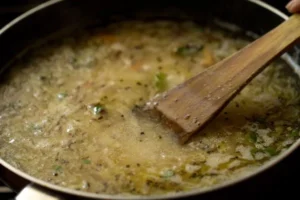
- Once you add the first batch of rava, stir and mix immediately so that the roasted rava gets mixed evenly with the water.
- Then add the next batch of rava. Mix and stir again very well ensuring that the batch of rava is mixed evenly in water.
- Continue to add and stir the rava up to the last batch.
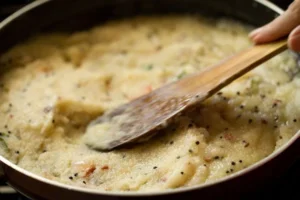
- Quickly stir and mix very well. The rava grains will absorb water, swell and get cooked.
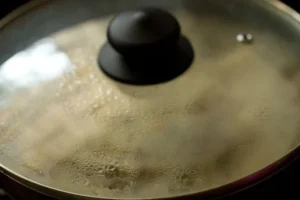
- Cover and allow the rava upma to steam for 2 to 3 minutes on a low heat.
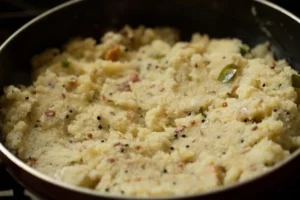
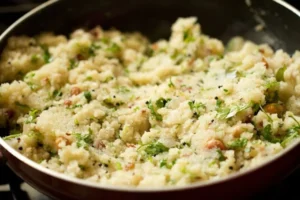
- Then turn off the heat. In the below photo, the rava is cooked well and the suji upma is ready.
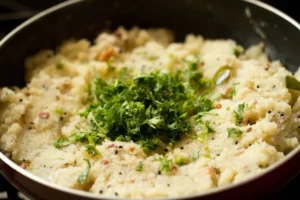
- Lastly add about 2 to 3 tablespoons of chopped coriander leaves (cilantro). You can add more coriander leaves if you like.
- Mix again and serve hot.
Notes
Serve upma hot or warm with slices of lemon or a side of lemon pickle or Coconut Chutney.
You can opt to drizzle half to one teaspoon of Ghee while serving. If you like you can garnish with some coriander leaves.
I also sprinkle some Sev (fried gram flour vermicelli) on it while serving. Though this is not the way this dish is traditionally served, the folks at home prefer this Mumbai style. You can also serve it with Idli Podi.
If you like, pair suji upma with classic Indian hot beverages like Masala Chai or Filter Coffee.